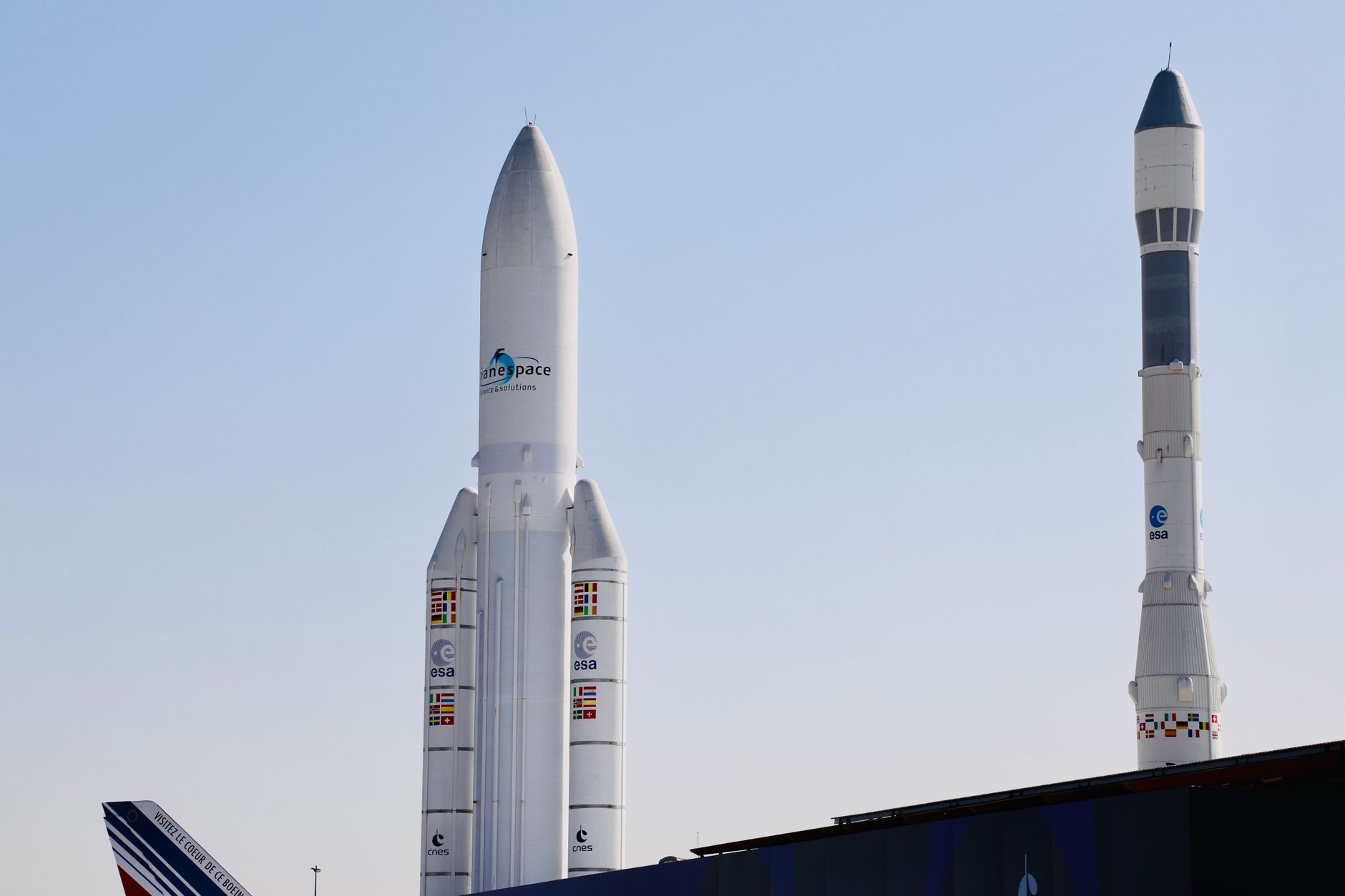
ISRO NVS-03 satellite has successfully launched, marking a significant achievement for the Indian Space Research Organisation. The record 56-day turnaround showcases ISRO’s growing capabilities in space technology.
Overview of ISRO’s Recent Launch
The Indian Space Research Organisation (ISRO) has recently achieved a significant milestone with the successful launch of the NVS-03 satellite via the Geosynchronous Satellite Launch Vehicle (GSLV) rocket. This launch marks a remarkable turnaround time of just 56 days, setting a new record for ISRO and demonstrating its increasing efficiency in satellite deployment.
The NVS-03 satellite is a vital addition to India’s navigation system, enhancing the capabilities of the existing NavIC constellation. This satellite is equipped with advanced features that will improve the accuracy and reliability of navigation services across various sectors, including transportation, agriculture, and disaster management.
ISRO’s recent accomplishments can be attributed to its commitment to innovation and technology. The successful launch has not only bolstered India’s position in the global space arena but also showcased the organization’s ability to meet tight deadlines without compromising on quality.
In addition to the technical advancements, the launch has sparked interest among various stakeholders, including researchers and industries that rely on precise navigation. The NVS-03 satellite is expected to play a crucial role in the future of spatial data applications in India.
With such impressive achievements, many are left wondering: is this the best launch yet for ISRO?
Significance of 56-Day Turnaround
The recent launch of the ISRO NVS-03 satellite marks a significant achievement for the Indian Space Research Organisation, particularly due to its remarkable 56-day turnaround time. This rapid deployment is not just a technical accomplishment; it represents a shift in the operational capabilities of ISRO, showcasing its potential to respond swiftly to the increasing demands for satellite launches.
The 56-day interval between the announcement and the actual launch has several implications:
- Increased Efficiency: The quick turnaround highlights ISRO’s improved processes and resource management, which may lead to more frequent launches in the future.
- Enhanced Competitiveness: By achieving such a rapid launch schedule, ISRO positions itself as a formidable player in the global space industry, competing with established space agencies.
- Boost to Communication Services: The NVS-03 satellite is designed to enhance navigation services across India, thereby improving both civilian and military applications.
- Inspiring Innovation: This success story may inspire further innovations within ISRO and the Indian space sector, encouraging new projects and collaborations.
In conclusion, the 56-day turnaround not only underscores ISRO’s capabilities but also sets a new standard for future satellite launches, potentially redefining the pace at which space missions can be executed.
Technical Details of GSLV Rocket
The GSLV rocket, or Geosynchronous Satellite Launch Vehicle, has been pivotal in advancing India’s space capabilities. For the launch of the ISRO NVS-03 satellite, the GSLV Mk II version was employed, showcasing its reliability and efficiency.
Key technical specifications of the GSLV rocket include:
- Height: Approximately 49 meters
- Weight: Around 420 tons
- Cargo Capacity: Can carry payloads up to 2,500 kg to geostationary transfer orbit (GTO)
One of the notable features of the GSLV is its three-stage propulsion system, which combines solid, liquid, and cryogenic technology. This allows for a more efficient launch process and greater payload capacity. The first stage is powered by solid rocket boosters, while the second stage uses liquid fuel. The cryogenic upper stage, which is crucial for placing heavier satellites into orbit, provides the final thrust needed to reach GTO.
The recent launch of the ISRO NVS-03 satellite not only demonstrates the rocket’s capabilities but also highlights ISRO’s commitment to enhancing satellite technology and improving launch turnaround times. Such advancements are setting new benchmarks for future missions.
Future Missions Planned by ISRO
The Indian Space Research Organisation (ISRO) has ambitious plans for future missions following the successful launch of the ISRO NVS-03 satellite. Building on the momentum from previous achievements, ISRO aims to expand its capabilities and reach new heights in space exploration.
Among the upcoming missions, several notable projects are in the pipeline:
- Gaganyaan Mission: This is India’s first crewed space mission, expected to take place in the near future. The goal is to send Indian astronauts into low Earth orbit and ensure a safe return.
- Chandrayaan-3: Following the success of Chandrayaan-2, this mission aims to further explore the lunar surface, focusing on landing near the Moon’s South Pole.
- Mangalyaan-2: The second Mars Orbiter Mission is planned to build on the success of its predecessor, with advanced technology to gather more data about the Martian atmosphere and surface.
- NavIC Expansion: The Indian Regional Navigation Satellite System (NavIC) aims to enhance its coverage and accuracy, supporting various applications in navigation and positioning.
With these future missions, ISRO continues to prove its commitment to space science and technology, making strides not only in launching satellites like the ISRO NVS-03 satellite but also in exploring new frontiers.
Public Reaction to the Launch
The launch of the ISRO NVS-03 satellite has generated a wave of excitement among space enthusiasts and the general public alike. Many took to social media to express their admiration, highlighting the significance of the achievement in the context of India’s growing prowess in space technology.
Public sentiment can be summarized through various themes:
- National Pride: Numerous users celebrated the launch as a testament to India’s scientific capabilities, with many expressing their pride in ISRO’s accomplishments on international platforms.
- Technological Advancement: Commentators noted the impressive 56-day turnaround time, which they described as a remarkable feat that positions ISRO as a leader in rapid satellite deployment.
- Future Prospects: Many individuals are eagerly anticipating the impact of the NVS-03 satellite on navigation services across the country, with expectations that it will enhance various sectors including transportation and communication.
- Global Recognition: Analysts pointed out that this successful launch could further elevate India’s status in the global space community, encouraging more international collaborations.
Overall, the successful launch of the ISRO NVS-03 satellite has not only captivated the public’s imagination but also reinforced confidence in ISRO’s future missions and capabilities.
The successful deployment of the ISRO NVS-03 satellite marks a significant milestone in India’s space exploration efforts. Many experts believe that the ISRO NVS-03 satellite could set new standards for future missions.